Why Consider a Generator
Power outages don’t just turn off the lights—they disrupt comfort, safety, and productivity. Whether you’re a homeowner worried about food spoiling and sump pumps stopping, or a business owner facing costly downtime, a backup generator provides peace of mind and protection. In this post, we’ll break down the key reasons to invest in a generator, from safeguarding your family and property to ensuring your business never misses a beat. Discover how the right generator can save you money, prevent emergencies, and keep life running smoothly when the grid goes dark.
GENERATORS
9/19/20257 min read
The benefits of Installing a Generator: Safety, Savings, and Peace of Mind
When the grid is running smooth, it’s easy to take electricity for granted. Flip a switch, and the lights glow; push a button, and your furnace kicks on. But the moment the power cuts, the reality hits hard: everything you depend on is tied to that invisible stream of energy.
We worked with a family who lost power for 18 hours during a summer storm. By the time we arrived, their basement sump pump had stopped, leaving standing water that ruined their new flooring. Their freezer, packed with months’ worth of food, was beginning to warm. The homeowner told me, “I thought we’d just be uncomfortable, but I didn’t realize how fast things could actually go bad.”
For homeowners, a generator means:
Comfort & Safety: Keep heat, cooling, and lights running when the grid fails.
Food & Essentials: Save hundreds of dollars in spoiled groceries and medicines that need refrigeration.
Peace of Mind: No more rushing to light candles or worrying about the kids being scared in the dark.
For business and commercial property owners, the stakes are even higher:
Avoid Downtime: Every hour without power can mean lost sales, lost productivity, or even lost clients.
Protect Equipment: Prevent surges or sudden shutdowns that can damage expensive machinery.
Keep Doors Open: A restaurant with a running generator during an outage often becomes the only place in town still serving, and customers remember that.
In short, a generator is more than a convenience—it’s protection. It’s the umbrella you keep in the car, the spare tire in the trunk. You may not use it every day, but when the storm hits, it can save you from a world of trouble.
Choosing the Right Generator
Standing in front of a wall of shiny new generators at a home improvement store can feel a bit like walking into a car dealership. Big ones, small ones, gas-powered, propane-fueled—it’s enough to make your head spin. But just like cars, generators come in different “makes and models” because they’re built for different jobs.
Think of it this way: a portable generator is like a compact sedan. It’ll get you from point A to point B, cover the basics, and it’s affordable. But a whole-home standby generator? That’s more like a pickup truck—built for heavy lifting, ready to go at a moment’s notice, and tough enough to carry the load without breaking a sweat.
Homeowners: Portable vs. Standby
We helped a homeowner who relied on a small portable generator during an outage. It kept their fridge humming and a lamp lit, but as soon as they tried to run the furnace, the breaker tripped. By the end of the night, they were juggling cords just to keep things running.
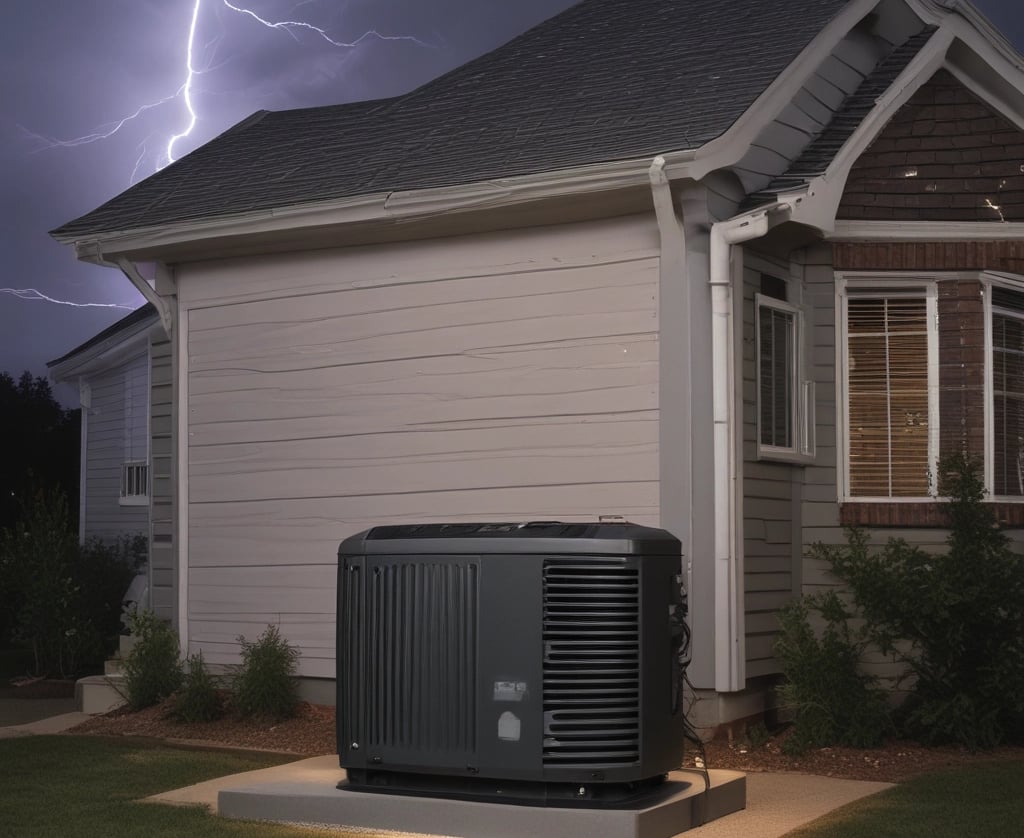
That’s where a standby generator shines. Permanently installed outside your home, it’s connected directly to your electrical panel. When the power goes out, it automatically flips on—no scrambling with gas cans or extension cords in the rain. For most families, a 7–10kW generator covers essentials. If you want to live life as if nothing happened—running the AC, the oven, and all your lights—you’ll want something in the 14–20kW range.
Commercial Property Owners: Scaling Up
Commercial and industrial spaces play by different rules. Here, you’re not just keeping the lights on—you’re protecting inventory, keeping security systems live, and ensuring production doesn’t stall. We had a small manufacturing shop that lost power mid-production run. Without backup, the machines shut down, costing them thousands in lost materials and man-hours. After that, they invested in a 60kW standby system, and during the next outage, they didn’t lose a single minute of work.
How to Choose a Generator
Start with your essentials: What must stay on? For a home, that might be furnace, fridge, and sump pump. For a business, it might be servers, freezers, or critical machinery.
Add it up: Every appliance has a wattage requirement. Add them up, and you’ll know your baseline. (A Wire Nuts electrician will help calculate this safely.)
Plan for growth: If you think you’ll add more equipment in the next 5 years, size up a little—it’s cheaper than replacing too soon.
Wiring & Installation Basics (Non-DIY Overview)
Here’s the truth most people don’t realize until it’s too late: buying a generator is only half the battle. The real magic—and the real safety—comes in how it’s wired and installed.
Picture your home or business as a heart. The electrical panel is the heart muscle, pumping power through the veins (your circuits) to every room. A generator is like an artificial pacemaker. But just like you wouldn’t want an untrained hand messing with your heart, you don’t want anyone but a licensed electrician handling how your generator ties into your electrical system.
Why Wiring Matters
The Wire Nuts were called out to a home where the owner had tried to hook up a portable generator directly to his panel without a transfer switch. It worked for a while—until the power company restored service. The generator backfed electricity into the utility lines, putting linemen in danger and frying the homeowner’s own appliances. One mistake, and suddenly that “DIY shortcut” turned into thousands of dollars in damage and a near-miss tragedy.
That’s why transfer switches are the unsung heroes of generator installs. They act like traffic cops, making sure power flows one way or the other—but never both at the same time. With a proper switch, your generator knows exactly when to step in and when to step back.
Safe Placement of Generators
Generators need to breathe. Just like you wouldn’t run a car in a closed garage, you can’t tuck a generator in the basement or too close to a window. Carbon monoxide is invisible, odorless, and deadly. A rule of thumb: place it outdoors, on a stable pad, and at least 5 feet away from any openings.
Permits and Inspections
Counties and municipalities often require permits for generator installs, especially if it’s a whole-home system. This isn’t just red tape—it’s a safeguard to make sure the wiring meets code and won’t endanger your property. Inspections catch little things (like improper grounding or clearance issues) before they become big problems. The Wire Nuts will handle getting all permits and inspections for generator installation.
Maintenance & Safety Tips for Generators
A generator isn’t “set it and forget it.” Like any machine with moving parts, it needs routine attention to ensure it works when the power goes out. Here are the essential practices every homeowner and business owner should follow:
Routine Testing
Monthly Exercise: Run your generator for 10–15 minutes once a month. This keeps internal parts lubricated, the battery charged, and ensures the system is ready to go.
Automatic vs. Manual: Many standby generators have an auto-test feature built in. If yours doesn’t, schedule the test manually.
2. Fuel Management
Gasoline: Degrades in as little as 30 days. If you rely on gas, use stabilizers and rotate your supply.
Propane & Natural Gas: Cleaner and longer-lasting. Propane tanks should always be kept filled to at least 25% capacity to prevent pressure issues.
Diesel: Powerful and efficient but requires additives to prevent microbial growth and gelling in cold weather.
3. Filter & Oil Changes
Schedule: Most manufacturers recommend oil and filter changes every 100–200 hours of operation, or at least once per year.
Reason: Dirty oil leads to overheating and reduced engine life.
4. Keep it Clear
Ventilation: Maintain at least 3–5 feet of clearance on all sides.
Debris: Remove leaves, snow, or anything that could block airflow or cooling.
5. Professional Service
Annual Inspection: A certified technician should check wiring, transfer switch operation, voltage output, and overall system health.
Battery Replacement: Replace every 2–3 years, even if it still appears functional.
6. Safety Reminders
Never operate a portable generator indoors or in enclosed spaces—carbon monoxide kills more than 400 people in the U.S. annually.
Always use outdoor-rated extension cords for temporary setups.
Ensure your system is properly grounded to prevent electrical hazards.
Bottom Line: Regular upkeep isn’t optional—it’s the difference between a generator that saves the day and one that fails when you need it most.
Cost vs. Value
A generator is an investment and understanding the balance between cost and long-term value helps homeowners and business owners make informed decisions.
Upfront costs
Portable Generators: $500–$2,500 depending on size and features.
Residential Standby Generators: $3,000–$7,500 for the unit itself. Installation, transfer switch, permits, and site prep typically add $2,000–$5,000.
Commercial/Industrial Generators: $10,000–$50,000+ depending on size (20kW to 100kW+) and installation requirements.
Ongoing Costs
Fuel: Expect 0.5–5 gallons per hour depending on generator size and load. Propane and natural gas tend to be more consistent in pricing, while gasoline and diesel can fluctuate.
Maintenance: Annual servicing averages $200–$500 for residential units, and $1,000–$3,000 for commercial systems.
Value Over Time
Residential: Prevents food loss (average $250–$500 per outage), avoids water damage from sump pump failure (repairs often $5,000+), and provides comfort/security.
Commercial: Protects revenue streams. Even a 6-hour outage can cost small businesses thousands in lost sales, spoiled inventory, or machine downtime.
Property Value: A standby generator can increase resale value by 3–5%, especially in regions prone to outages.
Insurance & Incentives
Some insurers offer premium discounts for properties with permanent standby systems.
In certain states and utility areas, rebates or tax incentives may offset installation costs (worth checking locally).
Questions Worth Asking Yourself
Do I want something temporary (portable) or permanent (standby)?
How much am I willing to manually manage during an outage?
Do I care about running just the basics, or keeping everything fully powered?
At the end of the day, choosing a generator isn’t about getting the biggest or the cheapest—it’s about finding the right fit for your lifestyle or business needs. Just like a pair of work boots, it should be sturdy, reliable, and tailored to the job you expect it to do.
Bottom Line: While the initial expense may seem high, a generator often pays for itself in a single prolonged outage. It’s not just a purchase—it’s risk management and long-term protection for your home or business.
Reliable electrical solutions for Wisconsin homes and businesses.
Company
thewirenutsllc@gmail.com
920-382-0077
© 2025 The Wire Nuts LLC | Licensed Electrical Contractor #1360-EC | Serving Dodge, Washington, Waukesha, Milwaukee, & Fond du Lac Counties | 920-382-0077